


May Is More Than a Month. For Millions of Americans, It Is Personal.
Every May, two communities that rarely get a front-page moment are asked to be seen. People living with ALS, and people navigating life with Arthritis. At Ease, this month means something real to us. When you build for mobility and independence, you learn quickly that behind every wheelchair and every adapted routine, there is a person who did not sign up for any of this. And figured out how to live anyway.
ALS: When Your Own Body Stops Following Orders
ALS, or Amyotrophic Lateral Sclerosis, tends to arrive quietly. Maybe a hand that grips a little differently than it used to. Words that take a half-second longer to form. A stumble that should not have happened. And then, slowly or not so slowly, the signals the brain sends to the muscles start getting lost along the way.
It is a progressive neurodegenerative disease that destroys the nerve cells responsible for voluntary movement. It does not discriminate by age, background, or lifestyle. And in the United States, it is far more common than most people realize.
What makes ALS particularly difficult to sit with is the pace. The disease moves differently for everyone. Some people progress rapidly over months, others more slowly over years. But what stays consistent is this: the person inside does not go anywhere. People with ALS continue to think, feel, love, create, and parent long after the physical world has become much harder to navigate.
"People assume that losing mobility means losing yourself. That is not how it works. The hardest part is not the chair. It is watching the people you love struggle to understand that you are still all there."
Many people with ALS describe the diagnosis as a before-and-after moment. And then, after the shock, something surprising: a quiet but determined focus on what still works, what still matters, and what still makes them feel like themselves.
Signs that warrant early medical attention include:
Unexplained weakness, twitching known as fasciculations, or cramping, especially in the hands, feet, or throat area
Slurred speech, difficulty chewing, or trouble swallowing that was not present before and cannot be explained otherwise
Tripping or stumbling without an obvious cause, or dropping things more frequently than usual
Shortness of breath during rest or mild activity. This is a later-stage sign and should never be ignored or waited out.
What changes when a wheelchair enters the picture
For many people with ALS, a power wheelchair eventually becomes the primary way of moving through the world. And when it does, it brings a specific set of challenges that rarely make it into awareness conversations.
One of the most serious is pressure injury prevention. As ALS progresses and muscle control diminishes, the ability to independently shift weight is gradually lost. Most people reposition themselves dozens of times a day without thinking about it. When that stops being possible, pressure builds in the same spots hour after hour. Skin breakdown and pressure sores become a real and constant risk, and managing that risk requires active, daily attention.
Then there is respiratory positioning. This one surprises people. The angle and posture someone holds in their wheelchair directly affects how well their lungs can expand. Poor seating alignment can quietly restrict breathing capacity at a time when preserving every bit of respiratory function matters enormously. This is one of the reasons seating assessments are treated as a clinical priority for people with ALS, not simply a comfort consideration.
Communication is another layer that often gets overlooked. Many people with ALS rely on AAC devices, speech-generating technology that is frequently mounted directly to the wheelchair. When the chair does not provide stable, reliable positioning, using those devices becomes significantly harder. For a lot of people living with ALS, the wheelchair is not just transportation. It is the platform their voice runs on.
This May, Walk to Defeat ALS events are taking place in communities across the country, from Iowa to the Carolinas to California. If you know someone living with ALS, the most useful thing you can do is show up practically. Drive them somewhere. Sit with them. Ask what they actually need rather than guessing at it.
Fact sheets, virtual support groups, a free online caregiving course, and a nationwide care team network. All free of charge. Family Caregiver Alliance: ALS Caregiver Guide
A practical, compassionate guide covering daily care decisions, emotional support, and community resources for families navigating ALS together.
Arthritis: The Condition Everyone Thinks They Understand. And Almost Nobody Does.
Say the word "arthritis" and most people picture an older relative complaining about their knees when the weather changes. That picture is both incomplete and unfair. Arthritis is one of the most misunderstood conditions in America, and the people who live with it pay for that misunderstanding every single day.
There are over 100 types of arthritis. Osteoarthritis is the most common, the slow wearing down of cartilage over time. But Rheumatoid Arthritis is an autoimmune condition that can strike in your 30s, your 20s, or even younger. Psoriatic Arthritis. Ankylosing Spondylitis. Gout. Lupus-related joint disease. Each one is different. Each one is real.
What they tend to share is an invisibility that makes them particularly isolating.
"You can look fine at dinner and be in serious pain by the time you get home. You learn to perform wellness because explaining it is exhausting, and people do not always know how to respond."
The physical reality of arthritis is inflamed joints, morning stiffness that lasts hours rather than minutes, and a bone-deep fatigue that is not just tiredness. It is the body working overtime against itself. Over time, without consistent management, joint damage can significantly limit mobility and independence.
The emotional reality sits alongside all of that. There is grief for the version of yourself that moved without thinking about it. Frustration at a body that seems to change the rules daily. And a particular kind of loneliness that comes from a condition that is chronic, invisible, and too often dismissed as something people just need to push through.
They do not. And they should not have to.
When arthritis and a wheelchair intersect
For people with arthritis who use wheelchairs, whether full-time or part-time, there are very specific daily challenges that almost never come up in general awareness conversations.
Transfers are one of the most painful moments of the day. Getting in and out of a wheelchair when your wrists, shoulders, or hips are inflamed is not a minor inconvenience. It is something many people quietly dread and plan their entire morning around.
Hand and grip limitations create a different kind of problem. Propelling a manual wheelchair, or even adjusting a power chair's controls, when your hands are mid-flare is genuinely difficult. Many people find themselves stuck between needing to move and not being able to do so without real pain.
There is also the unpredictability of good days versus bad days. Arthritis does not follow a schedule. What works on a Tuesday, a certain seating position, a manageable activity level, can be completely unworkable during a flare on Thursday. This variability is exhausting to explain to others, and it makes consistent, adaptable daily support especially important for wheelchair users.
And perhaps the most overlooked reality: prolonged static sitting actively worsens arthritis stiffness. The body needs to move. But repositioning without assistance, or with painful joints, is its own obstacle. It becomes a daily catch-22 that wheelchair users with arthritis manage quietly and largely without acknowledgment from the people around them.
Early diagnosis and access to a rheumatologist. Seating that allows gentle repositioning throughout the day. Adapted equipment that accounts for grip and hand limitations, particularly on harder days.
Seating that locks the body into one position for hours. Equipment that requires significant hand strength to operate. And the well-meaning advice to push through it from people who have never experienced a flare.
The Arthritis Foundation's Walk to Cure Arthritis is marking its 25th anniversary in 2026, with events running across nearly 60 communities nationwide. This month is a good moment to stop minimizing what people around you are managing and ask what support actually looks like for them.
What Both Conditions Share That Nobody Talks About
ALS and Arthritis are medically distinct. One is neurodegenerative, one is inflammatory. But they share something that rarely makes it into awareness campaigns.
Both ask people to renegotiate their relationship with their own body. Quietly. Daily. Without much fanfare and usually without much acknowledgment from the world around them.
That renegotiation touches everything. How you move through a morning. How you show up for the people you love. How you hold a conversation when you are also managing pain or fatigue running quietly in the background. It is not a one-time adjustment. It is ongoing. And it is exhausting in ways that are genuinely hard to explain to someone who has never lived it.
For wheelchair users specifically, both conditions bring a shared set of concerns that deserve far more attention than they typically receive.
Both ALS and severe arthritis reduce the ability to independently shift weight throughout the day. Without that natural movement, pressure builds in the same areas for hours at a time. Skin breakdown is a serious and preventable complication that requires consistent, active management.
Depression and anxiety are significantly more common among people with chronic mobility conditions, and significantly undertreated. The wheelchair carries complicated feelings for many people. A symbol of freedom and visible difference, often at the same time.
Behind most people navigating these conditions is someone else absorbing a great deal of the weight. A partner, parent, or adult child who is also quietly struggling. Caregiver burnout is real, and it almost never makes the awareness campaigns.
When seating does not support a changing body well, the body compensates by working overtime just to maintain posture. That extra effort compounds fatigue that is already high. It shows up in everything else the day holds, and most people never connect it back to the chair.
"Nobody talks about how much energy goes into just sitting. When your chair is actually working for you, you have more left for everything else."
When the Chair Actually Works, Everything Else Gets a Little Easier
For people living with ALS or Arthritis who spend their days in a wheelchair, seating is not a background detail. It affects breathing, skin health, energy, communication, and the quiet question of whether today is going to be manageable. Ease Cushion® Gen 2 was built around that reality.
Active pressure management. All-day battery. 30-day risk-free trial.
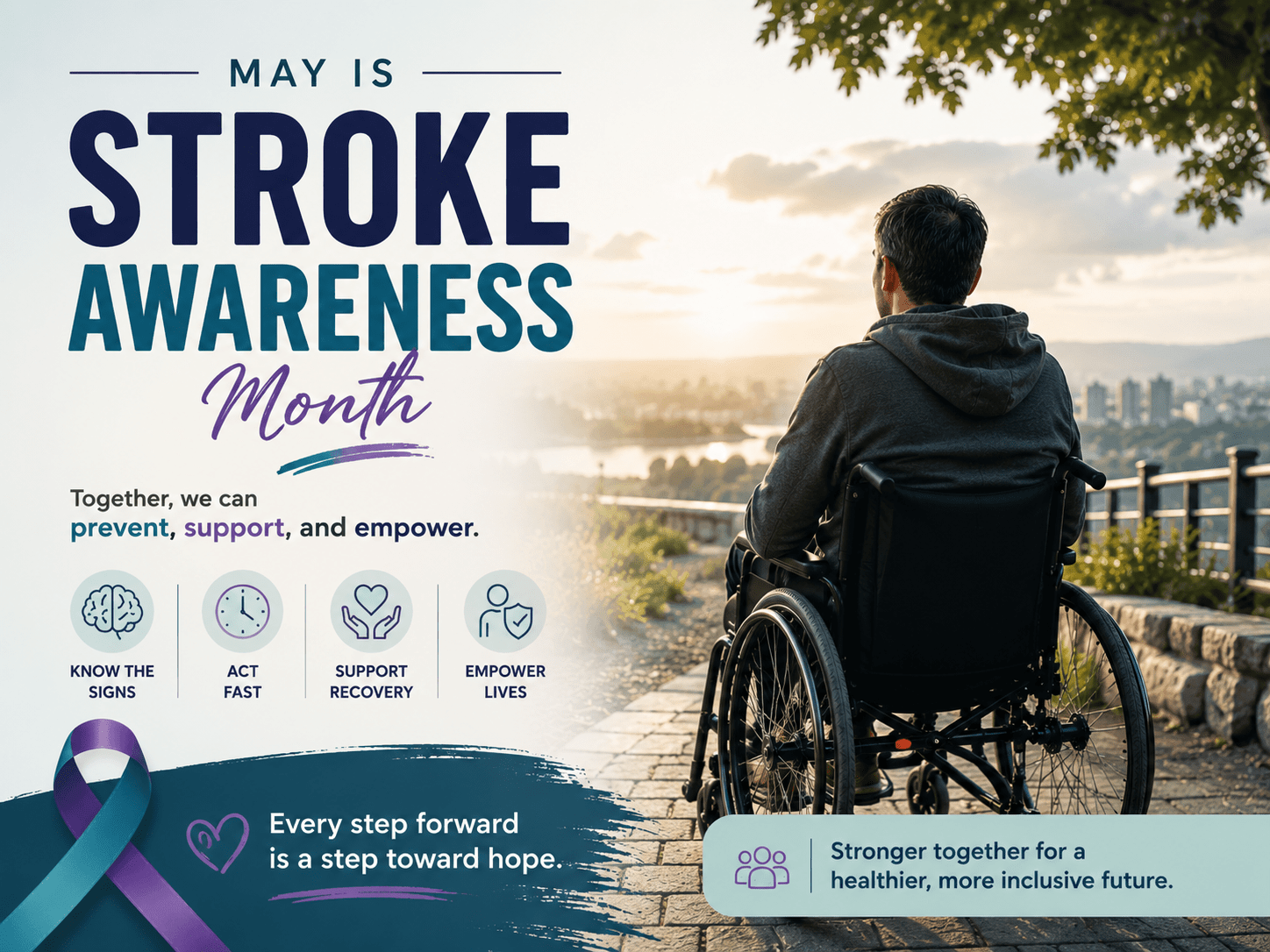
👉 Learn about Ease Cushion® Gen 2This article is part of the Ease May Awareness Series, which also covers Stroke Awareness and the connection between mental health and your chair. Stay tuned.


コメントを書く
このサイトはhCaptchaによって保護されており、hCaptchaプライバシーポリシーおよび利用規約が適用されます。