
Most people assume that having a cushion means they're doing everything they can for their seating health. It's a reasonable assumption — but for wheelchair users who can't independently shift their weight, it may be an incomplete one. Here's why that gap matters, and what to look for in a smart wheelchair cushion instead.
Your Body Was Built to Keep Moving
 Here's something most of us never think about: even during sleep, a healthy body unconsciously shifts its weight every 8 to 12 minutes. Not by choice — it's completely automatic. The body does this to redistribute sitting pressure and support circulation. It just happens, quietly, in the background, like breathing.
But for wheelchair users living with spinal cord injuries, ALS, MS, or similar conditions, that natural rhythm may no longer be available in the same way. The body stays still — sometimes for hours at a stretch — and that sustained, unrelieved pressure over time can place significant stress on skin and tissue, often without the user feeling it at all.
That's the biology. And it's the starting point for understanding why not all alternating pressure cushions are created equal.
The Problem: Most Cushions Are Passive
Foam cushions, gel cushions, and standard air cushions — the most common options in the cushion for pressure relief market — are all passive systems. They respond to movement, redistributing sitting weight when the user shifts position. That's useful. But it's also where their job ends.
The moment a wheelchair user stops moving, a passive cushion simply holds that position. No adjustment. No cycling. Just stillness.
For someone who can reposition throughout the day, this is manageable. For someone who cannot independently shift their weight — especially during long hours when caregivers aren't present — this is where most standard cushions quietly fall short. They feel like a solution. But they're waiting for movement that may not come.
This is what seating specialists mean when they talk about active vs. passive pressure management. It's not about how soft the cushion feels. It's about whether your smart seat for long sitting can do what the body can no longer do for itself.
🔗 Want to understand how passive and active seating compare? Read: What is HAPT®?
What Active Seating Does Differently
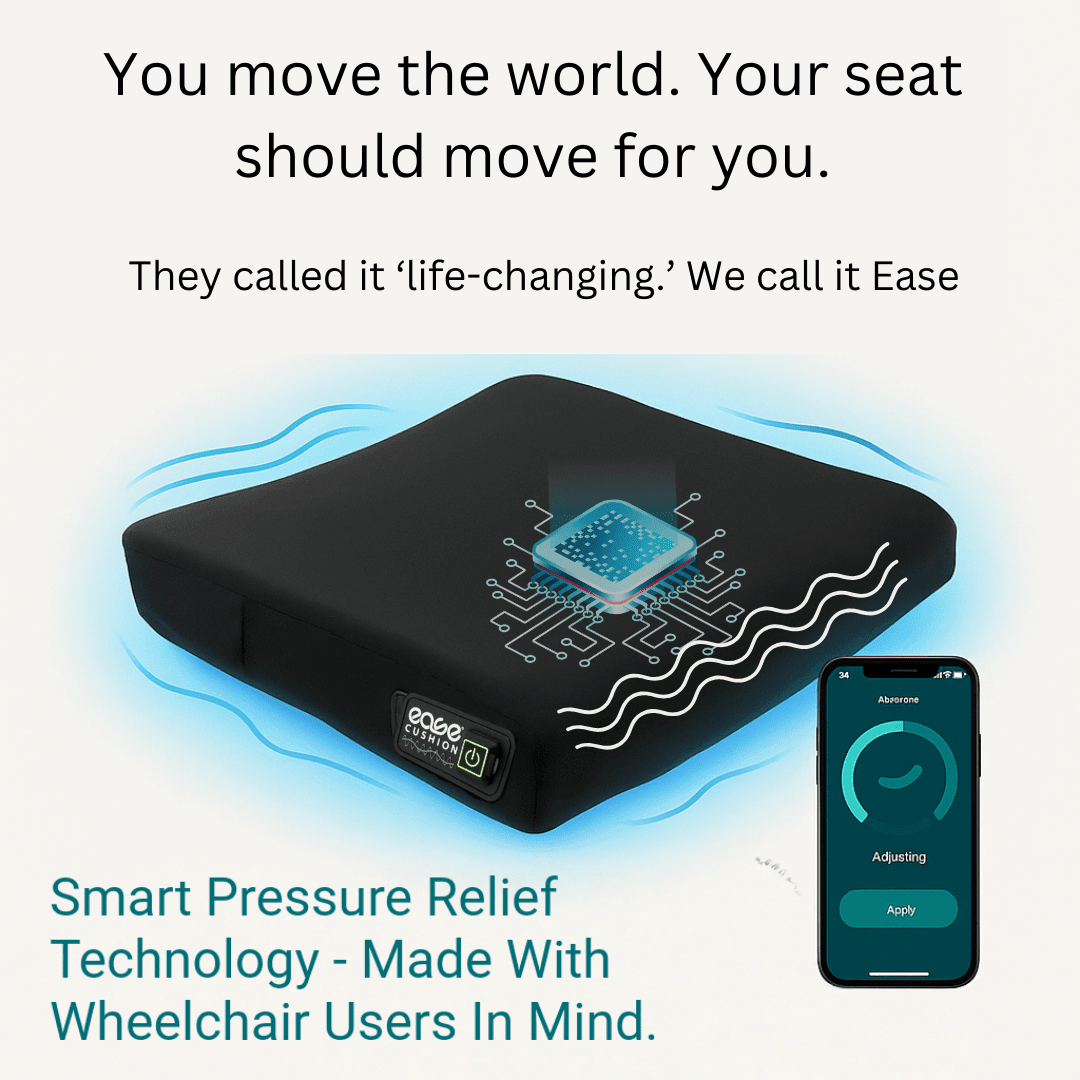
Ease Cushion® by Ease Seating Systems is engineered to support continuous pressure redistribution — whether the user moves or not. Its patented HAPT® (Horizontal Alternating Pressure Technology) doesn't wait for repositioning. Instead, it actively lift-and-shifts across the seating surface approximately 60 times per hour, designed to promote comfort during long sitting sessions and support healthy circulation for wheelchair users throughout the day.
We hear from customers that this automatic cycling makes a meaningful difference — especially during those long hours when caregivers aren't present and independent repositioning isn't possible.
Some practical features that make this work in real daily life:
- Near-silent operation — designed for offices, medical appointments, vehicles, and everywhere in between
- Up to 24-hour battery life (Gen 2) with magnetic assistive charging
- App control compatible with Siri and eye-tracker assistive technology — for users who cannot operate controls with their hands
- Foam failsafe base — engineered to provide secondary support if the pump ever pauses

It's not just a softer sit. It's a smart wheelchair cushion that's actively working — even when the room is quiet and no one else is around.
Want to go deeper? We've put together a detailed guide on the science behind pressure injuries and why active seating exists — read The Silent Emergency to learn more.
The Question Worth Asking
If you're a wheelchair user, or you care for one, here's a simple question worth sitting with: does the cushion currently in use move on its own — independently, on a schedule — even during the hours when no one is around to help?
If the answer is no, it may be time to explore what an alternating pressure cushion engineered for active seating support can genuinely offer.
Some users have reported that switching to active seating helped them — and their caregivers — feel more confident and at ease during long sitting periods. Ease Cushion® comes with a 30-day risk-free trial, making it simple to experience the lift-and-shift difference firsthand, without commitment.
👉 Experience Ease Cushion® Gen 2 — and improve sitting comfort today
⚠️ Disclaimer: This content reflects individual customer experiences and is not intended to diagnose, treat, or cure any medical condition. Viewer discretion is advised.


Dejar un comentario
Este sitio está protegido por hCaptcha y se aplican la Política de privacidad de hCaptcha y los Términos del servicio.